

















GD
GD: The Legendary Rhythm Platformer at First Impact
Welcome to GD, one of the most popular rhythm-based platforming games in the gaming world of all time! Confidence builds fast at the start, then disappears within seconds of a mistimed jump. Prepare yourself for an incredible challenge, because this is not a game for the faint-hearted!
Every run in GD feels like a high-stakes test of precision. One small mistake ends everything instantly, leaving no room for hesitation or second-guessing. Besides that intensity, the experience never feels unfair. Each failure reveals something new beneath the chaos. Then, that journey from confident start to spectacular victory keeps every run engaging. Lock into the rhythm and take the first jump right now!
How GD Actually Plays
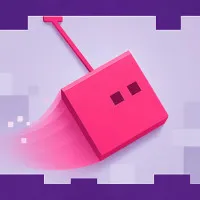
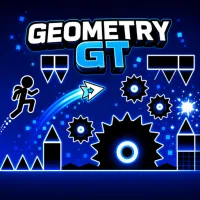
Each attempt in GD challenges players to master timing, rhythm, and precision. You will control an initial cube with some core rules that shape every level:
- Forward movement never stops
- Obstacles demand precise timing to avoid
- Colliding with obstacles ends the run instantly
- Immediate restart after each failed attempt
- Completing all obstacles equals victory
Mastering these rules takes focus and practice. Yet, the real test challenges players to adapt to both silent obstacle runs and rhythm-driven sequences while mastering essential controls.
Play without Sound: Obstacle Focus
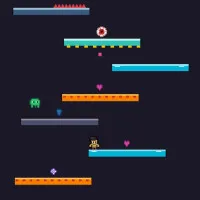
Playing GD without sound turns every level into a test of pure reflexes. Without music, attention centers entirely on the obstacles ahead. All obstacles, even a tiny object, demand split-second reactions with some typical hazards like:
- Spikes: sharp tips blocking direct paths
- Moving platforms: shifting surfaces that require timing
- Saw blades: rotating hazards with predictable arcs
- Gravity flips: sudden inversion of movement direction
- Sudden gaps: empty spaces demanding precise jumps
- Tight sequences: consecutive obstacles with minimal spacing
- Monsters: animated obstacles with erratic movement
Silent runs in GD reveal the underlying structure of each level. Patterns that go unnoticed with sound become clear, training eyes and reflexes to act perfectly. Players learn to read the level as a visual puzzle, executing jumps, drops, and flips with pixel-perfect accuracy. Mastering silent obstacle courses builds the skills necessary to tackle rhythm-driven challenges when the music returns.
Play with Sound: Rhythm Focus
Turning on music in GD changes everything. Levels no longer rely purely on visual cues; sound becomes the guide, and every move aligns with the beat. Key functions of music in gameplay include:
- Beat-aligned jumps: obstacles sync with the rhythm for smooth timing
- Tempo cues: shifts in music signal changes in obstacle speed
- Gravity flips & drops: audio drops indicate sudden movement shifts
- Flow guidance: music guides the anticipation of upcoming hazards
- Performance feeling: each run becomes a rhythm-based showcase
Music transforms levels from simple challenges into dynamic, choreographed experiences. Players learn to “dance” with the cube, syncing their actions to the soundtrack’s highs and lows.
Controls to Jump and Survive in GD
To allow players to fully focus on guiding their icon to victory, rhythm-based games introduces extremely simple control mechanics. But, accurately grasping the rhythm and timing completely depends on your skill!
This platformer allows you to use the mouse click, the spacebar, or the up arrow key for:
- Quick presses: short jumps for spikes and gaps
- Hold the key: continuously jump or fly upward
- Timing focus: presses align with obstacle placement
- Colorful pads: automatically leap when touching
- Jumping orbs: interact for a precise mid-air jump
- Various portals: change form, gravity, size, speed, or direction
Earn Every Pixel of Progress
GD also tracks accomplishments through built-in achievement systems. Progress becomes visible over time, giving players a clear sense of growth and mastery. Moreover, in-game rewards will reflect dedication and consistency across runs. Players can unlock and collect:
- Icons and colors: earned through achievements and milestones
- Stars and coins: gained by completing levels and hidden paths
- Secret rewards: mana orbs, diamonds, and others for extended contents
The Infinite GD Level Engine
Beyond built-in content, GD expands through a powerful level creation system. Players can design and share custom stages, turning the game into a constantly growing space of new challenges. Community creations bring a wide range of experiences, from simple practice runs to complex, high-skill levels. This evolving ecosystem ensures that rhythm-based games never feels static, giving players endless reasons to return and explore new levels.
Training the Unseen Skills Beyond the Screen
Skill growth in rhythm-based games happens naturally through repeated play, shaping how players react, think, and stay in control.
- Timing instinct: actions align naturally with movement and patterns
- Pattern memory: sequences become easier to recognize and recall
- Sustained focus: attention stays sharp through long attempts
- Precision control: inputs become more accurate and consistent
- Anticipation: players predict obstacles instead of reacting late
These abilities carry into every run, turning fast sequences into something more readable and controlled over time.
You Don’t Beat the Level — You Become It!
In GD, every level feels like a moving system waiting to be decoded. Sharp spikes, shifting paths, and sudden transitions stop being threats and start becoming signals. Control builds through awareness, and each sequence turns into something you can read, predict, and execute with confidence.
Step into the rhythm-based games world, stay sharp, and show the level who’s in control!